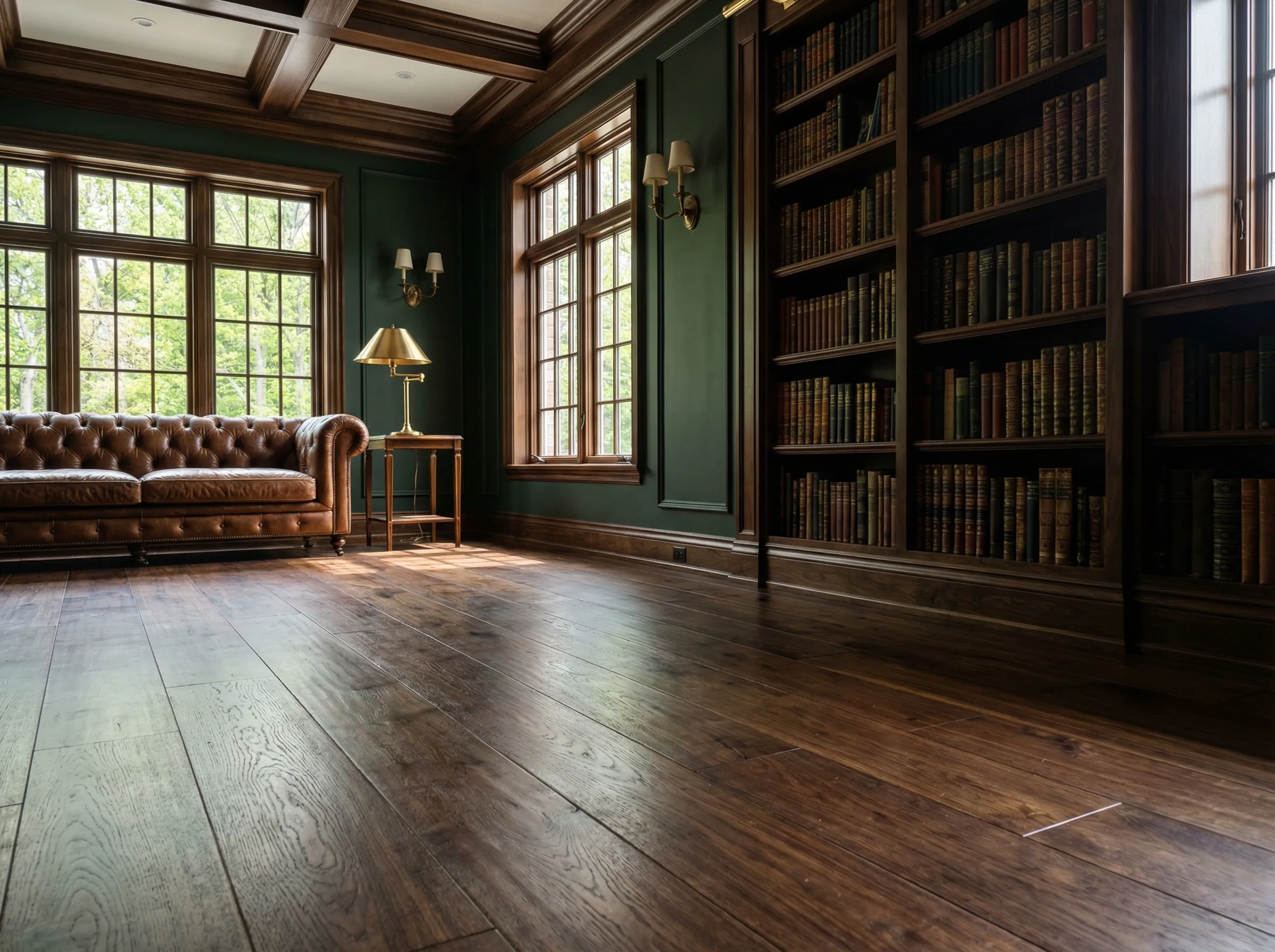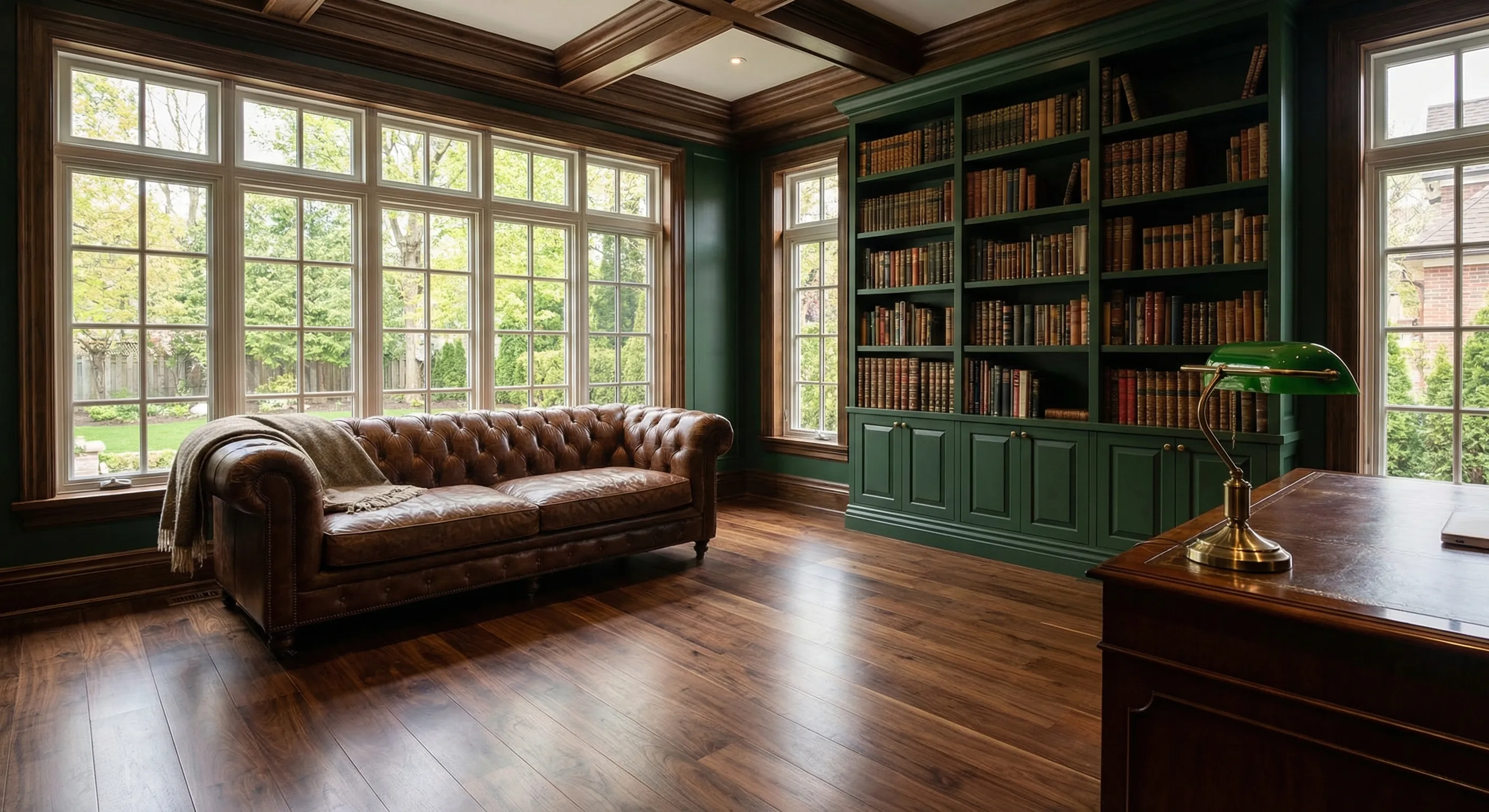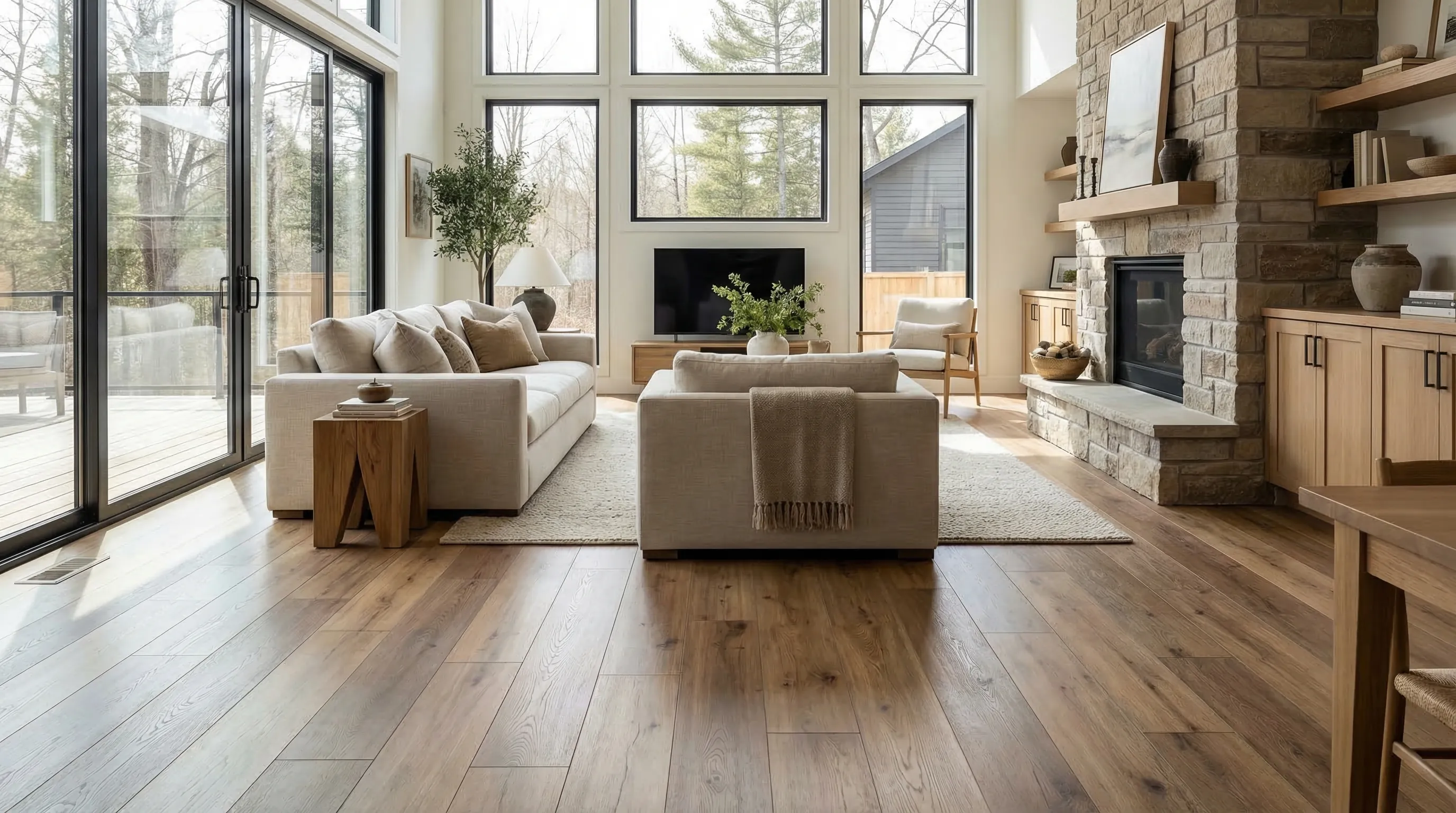

Hardwood vs. Engineered Hardwood: Which is Right for Your Markham Home?
When homeowners visit our Markham showroom at BBS Flooring, the most common question we get is: "Should I choose solid hardwood or engineered hardwood?"
Both options offer the timeless beauty of real wood, add significant value to your home, and come in a massive variety of species, stains, and finishes. However, their structural differences mean they behave very differently depending on where they are installed in your house.
Here is our comprehensive guide to help you make the right choice for your next renovation.
The Classic Appeal of Solid Hardwood
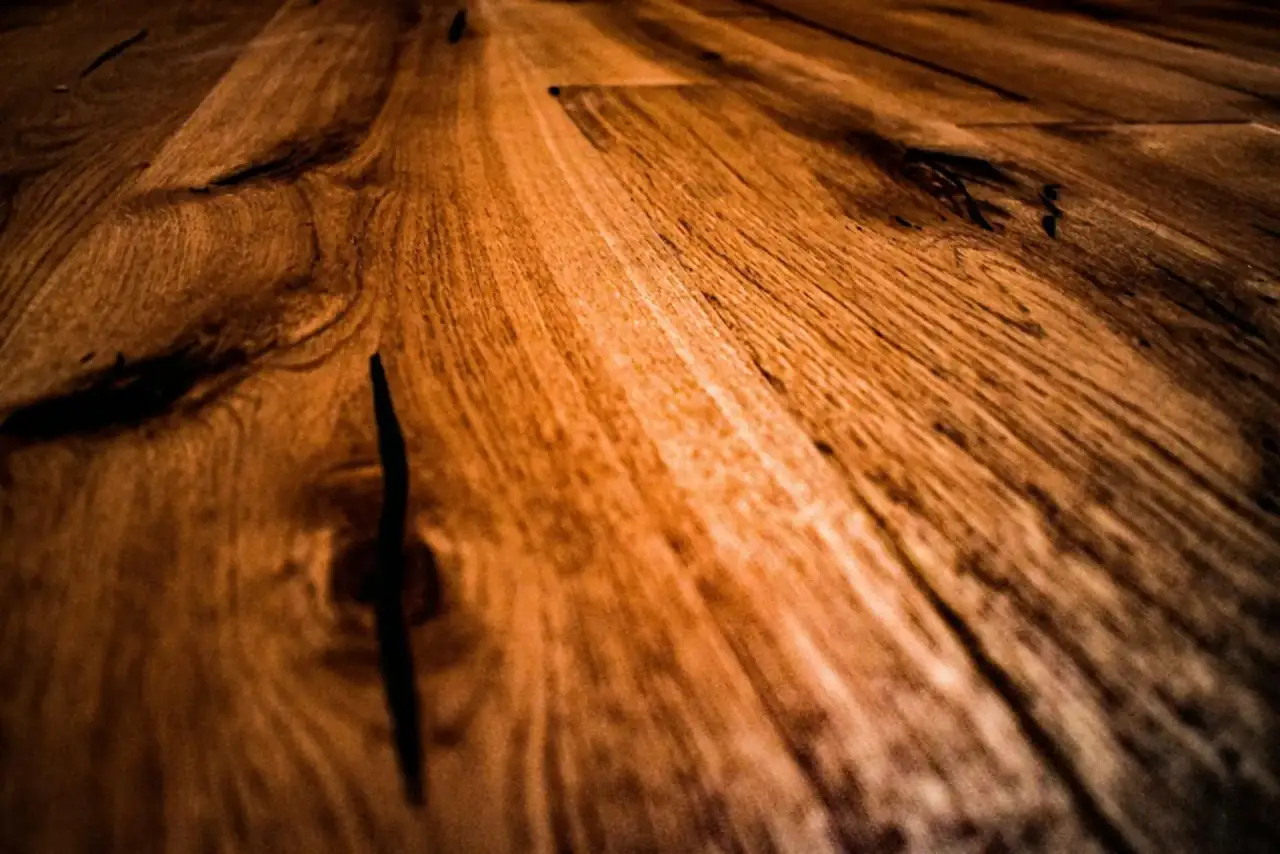
Solid hardwood is exactly what it sounds like: each plank is milled from a single, solid piece of timber (like Oak, Maple, or Hickory). It is the traditional standard of luxury flooring.
The Pros:
- Incredible Longevity: Because it is solid wood all the way through, it can be sanded and refinished multiple times. A well-maintained solid hardwood floor can easily last a century.
- Maximum Home Value: Real estate agents consistently highlight solid hardwood as a premium selling feature.
The Cons:
- Moisture Sensitivity: Solid wood expands and contracts with humidity changes. In the Canadian climate, it is highly susceptible to warping or gapping if indoor humidity isn't strictly controlled.
- Installation Limits: It cannot be installed in basements (below grade) or directly over concrete. It must be nailed or stapled to a wooden subfloor.
The Modern Versatility of Engineered Hardwood
Engineered hardwood is still 100% real wood, but it’s constructed differently. It features a top layer (the veneer) of premium solid hardwood, bonded to a high-quality plywood or high-density fiberboard (HDF) core. Once installed, it looks absolutely identical to solid hardwood.
The Pros:
- Superior Stability: The cross-layered core prevents the wood from expanding and contracting as much as solid wood. This makes it highly resistant to temperature and humidity fluctuations.
- Install Anywhere: Unlike solid wood, engineered hardwood can be installed in basements, over concrete slabs, and in condos. It can be glued down, floated, or nailed.
- Radiant Heat: Many engineered floors are compatible with under-floor radiant heating systems.
The Cons:
- Refinishing Limits: Because the top layer of real wood is thinner (typically 2mm to 4mm), it can usually only be sanded and refinished once or twice in its lifetime.
Head-to-Head Comparison
1. Durability
Tie. The surface durability of both floors depends entirely on the species of wood (e.g., Maple is harder than Oak) and the quality of the factory finish applied to the top layer.
2. Moisture Resistance
Winner: Engineered Hardwood. If you are renovating a basement, living in a condo with concrete subfloors, or have an environment with fluctuating humidity, engineered hardwood is the clear winner.
3. Cost
Winner: It Depends. Generally, engineered hardwood is slightly more cost-effective, but premium engineered floors with thick wear layers can cost as much as or more than traditional solid wood. Installation costs for engineered floors are often lower since they can be floated rather than nailed.
The Verdict: Which should you choose?
If you have a traditional wooden subfloor on the main or upper level of your home, and you want a floor that will last generations with multiple refinishings, Solid Hardwood is a fantastic investment.
If you are installing over concrete, finishing a basement, living in a condo, or want a wider plank (which is more prone to warping in solid wood), Engineered Hardwood is the superior, safer choice.
Still not sure? Visit the BBS Flooring showroom at 6061 Highway 7 in Markham. Our experts will show you samples of both side-by-side and help you choose the perfect fit for your home and budget.